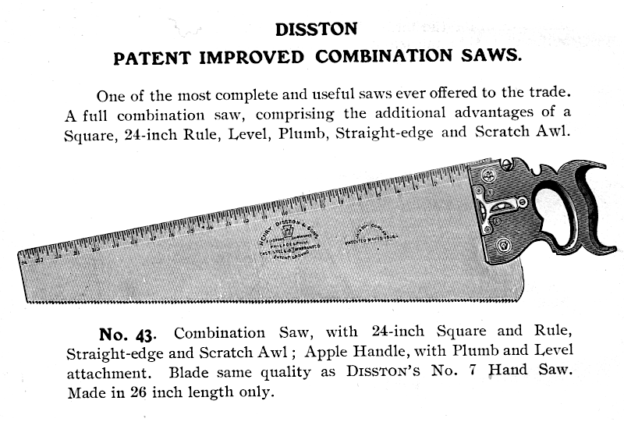
 Disston No. 43 Combination Saw
This week I’ll be talking saws. Besides the hammer and knife, the saw is one the oldest human-made tools. Saws come in such great diversity, with different shapes, sizes, type of cut, and tooth geometry. This will be a pretty long blog entry by necessity as I own quite a few different types of saws and they all deserve a explanation of use and a bit of history. I’ll be presenting my saws to you, explaining what I use them for and where I got them (if I can remember). Like other tools I own, my saws cover only a fraction of the saw types available. I tend to use the sharpest and fastest cutting saws of any particular type. Saws are only useful when they’re sharp. I’m not the best saw sharpener, but I do ok. I’d rather be cutting wood than sharpening saws. Rip saws are pretty easy to sharpen, but crosscut saws are a bit more of an art than science. Don’t get me wrong, there’s plenty of science in saw geometry, but the actual sharpening is a lot more of a learned skill. Even so, it is one that is best learned if you plan to do any hand sawing of your work. I will include my saw sharpening tools in addition to my saws in this entry. So let’s get started.