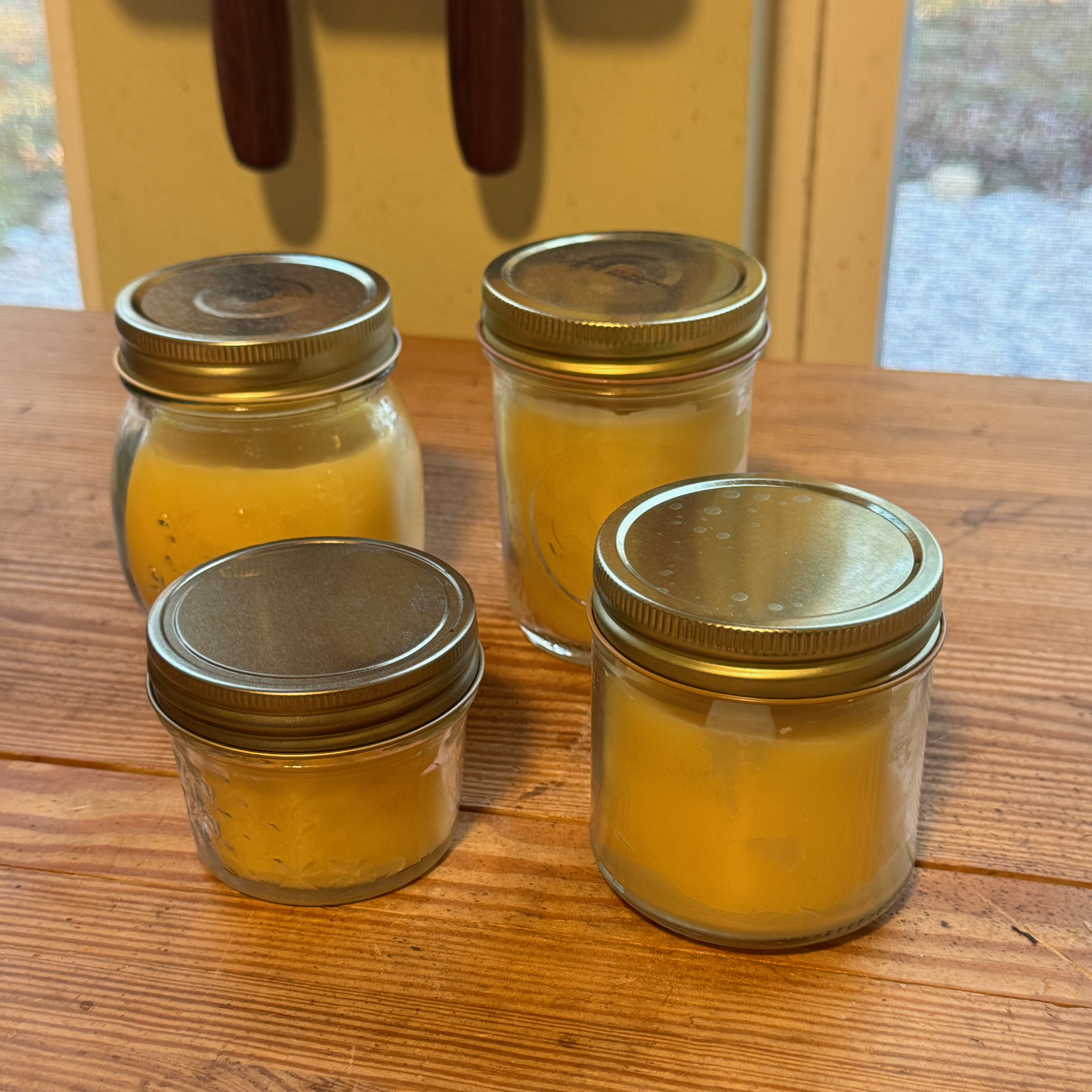
Well, it’s that time of the year when a man’s thoughts turn to soft wax. Homemade soft wax is an indispensable component in any traditional woodworking shop. It’s safe, easy to use, and has a lot of applications from coating tools to prevent rust to using it as a milk paint top coat.
I decided to make up a fresh batch today, as I had all the materials according to Lost Art Press’s recipe, which calls for 2 cups of boiled linseed oil, 108 g of food-grade beeswax, and 4 tablespoons of citrus solvent. I added an extra tablespoon of solvent because I wanted my wax just a little bit softer.
The great thing about making your own soft wax is that there are no harsh chemicals, and you don’t have to put on a mask or worry about ventilation when you apply it. Some commercial waxes contain metallic driers that can be harmful to your health. I highly recommend making some homemade soft wax for yourself, as it’s a great alternative to that big-box store stuff that isn’t so good for you.
Soft Wax Recipe (Fine Woodworking) – Chris Schwarz’s detailed version of the Lost Art Press recipe.
The recipe is also included in Chris’s book “American Peasant,” which he provides the downloadable PDF for free. Just search for “soft wax.” This is a wonderful book, BTW, and I suggest you buy the hard copy too to support this company that does so much for our hobby/craft/vocation!
Here is the Lost Art Press YouTube Video on making soft wax.
Getting it all together
It took me a minute to get all the parts together for this batch. I did some thrifting a couple of weekends ago and found a really nice small crockpot that was just the right size, but it was missing its knob. Fortunately, I know how to design parts and I have a 3D printer, so I was able to replace that knob with my own creation.
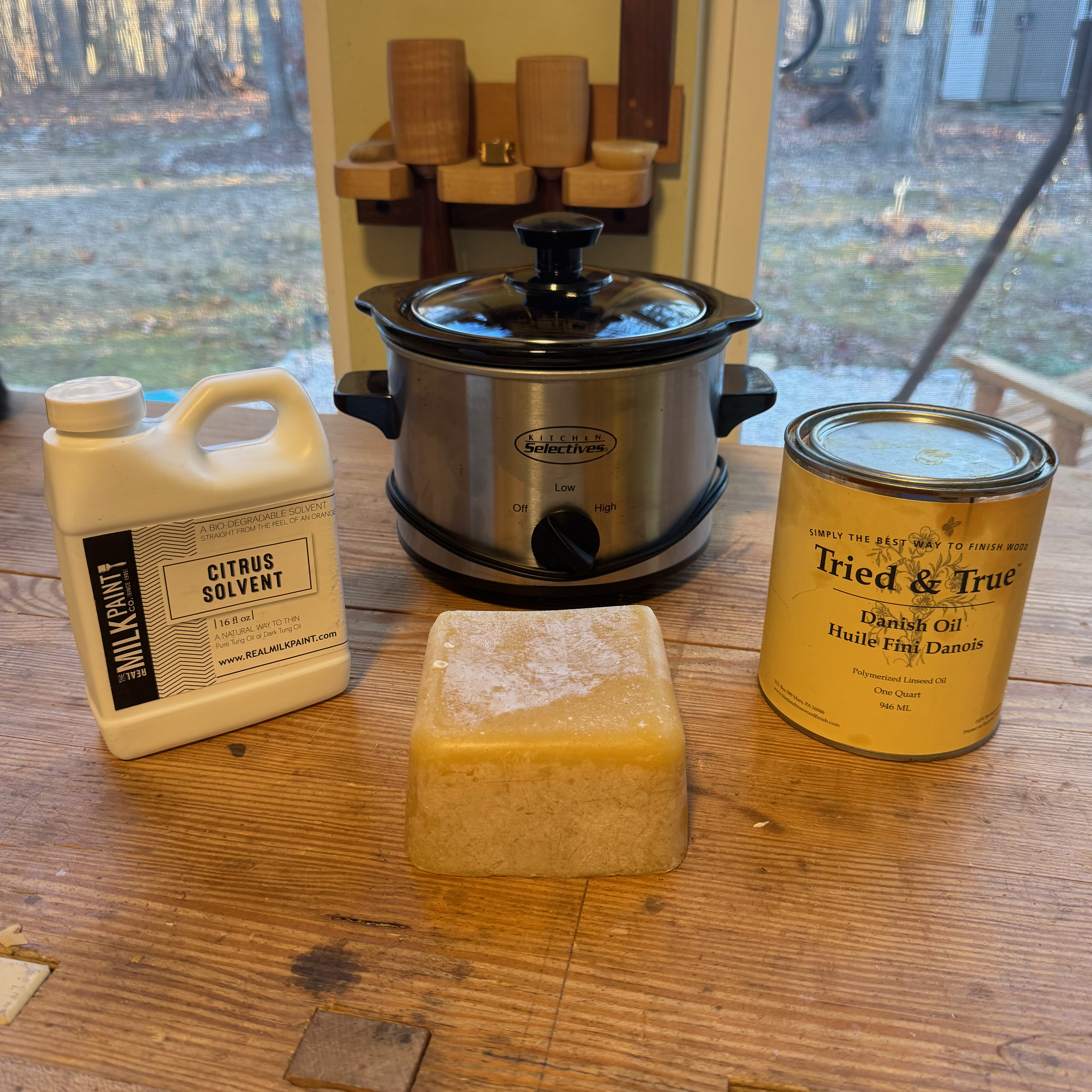
I also had to order the citrus solvent, as I didn’t have any on hand. I already had the beeswax and the boiled linseed oil.
I followed the instructions for the recipe (except, as mentioned earlier, I added a little more solvent to make a softer wax), and it came out perfect. I made the exact amount they recommended and ended up with four small glass jars. I like to use jars similar to jelly jars that take a small Mason jar lid. They’re easy to store and not too bulky.
I put the linseed oil in a large tin can and used it as a double boiler, and added the other ingredients as the recipe calls for. I also used a food thermometer to keep an eye on the oil temperature, making sure it stayed below 180°F. It mostly hovered in the 150°F–155°F range during the entire process, which worked out really well.
Uses for soft wax
I use soft wax for many different things, including but not limited to coating iron and high-carbon steel tools to prevent rust, reconditioning leather sheaths and other leather items, and even treating my leather boots. It can also be used over milk paint as a finish, which is very easy to apply and nearly foolproof.
Final Thoughts / Links
I want to thank Lost Art Press for this recipe and everything else they do for the craft! To sum it up, this is a fun and easy project that adds a natural finish to your process. Go ahead and make some for yourself; you’ll be glad you did.
Links to all the products:
Let me know if you’ve made or are considering making your own soft wax.
Peace,
Aaron

There are costs associated with running a website. Your donations go directly to keeping this site active.